
If you follow competitive gaming seriously, one website is never enough. Different platforms cover different things: tournament brackets and player histories, game-specific match stats, personal rank tracking, and viewership numbers. These top 10 sites are worth bookmarking regardless of which titles you follow.
1. Liquipedia
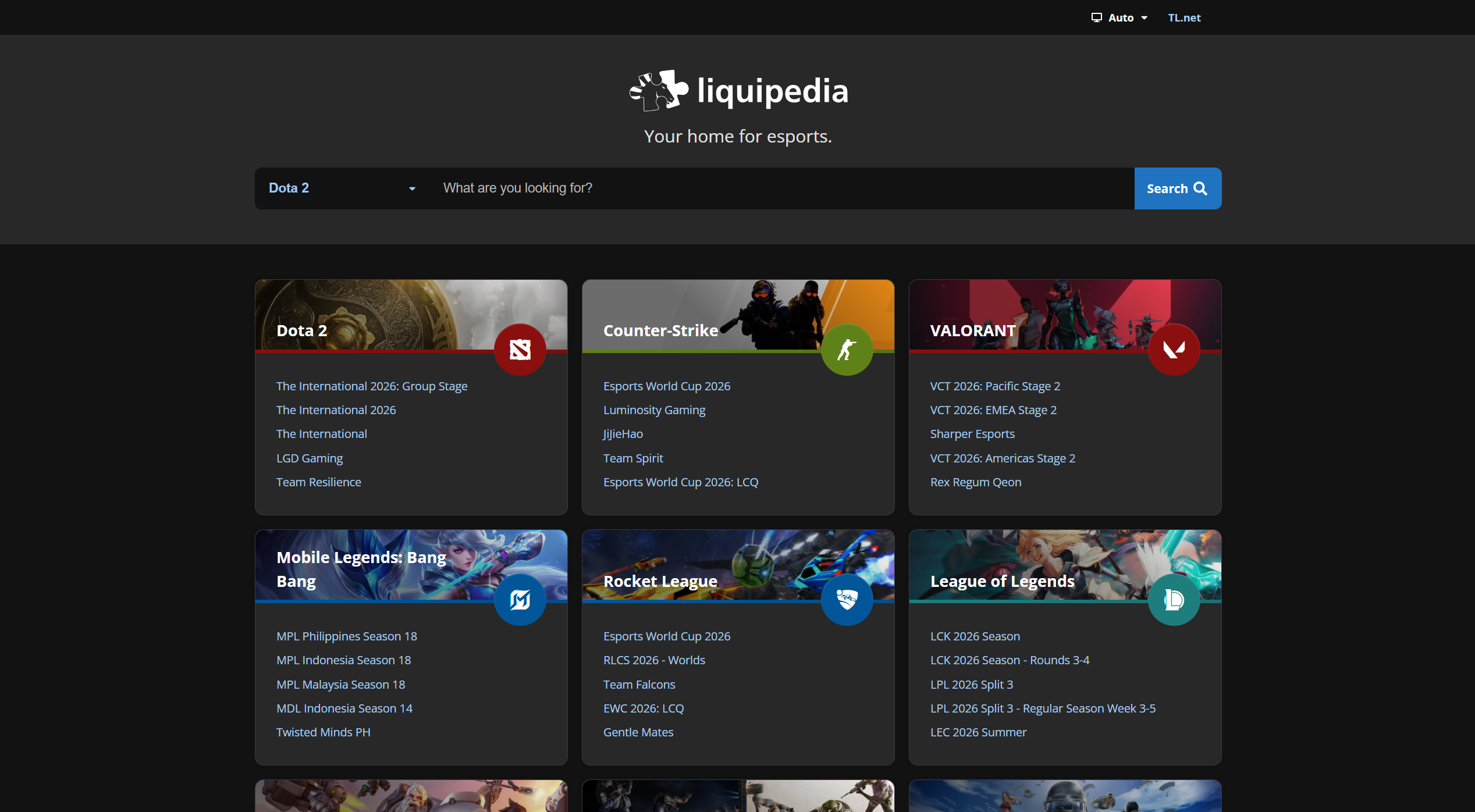
Liquipedia is the largest esports tracker in the world, with coverage spanning Counter-Strike 2, League of Legends, Valorant, Dota 2, and dozens of other competitive titles across one unified database. Its tournament pages include full bracket histories, match results, team rosters, prize pool records, and player profiles going back years. The wiki format means community contributors actively update information, so roster changes and match results typically appear faster than on news-based alternatives. Player pages track career results across multiple games and regions, making Liquipedia the most useful starting point for researching anyone in the professional scene. Cross-game player research that would take hours of searching across separate sites can usually be done in minutes here.
2. Tracker.gg
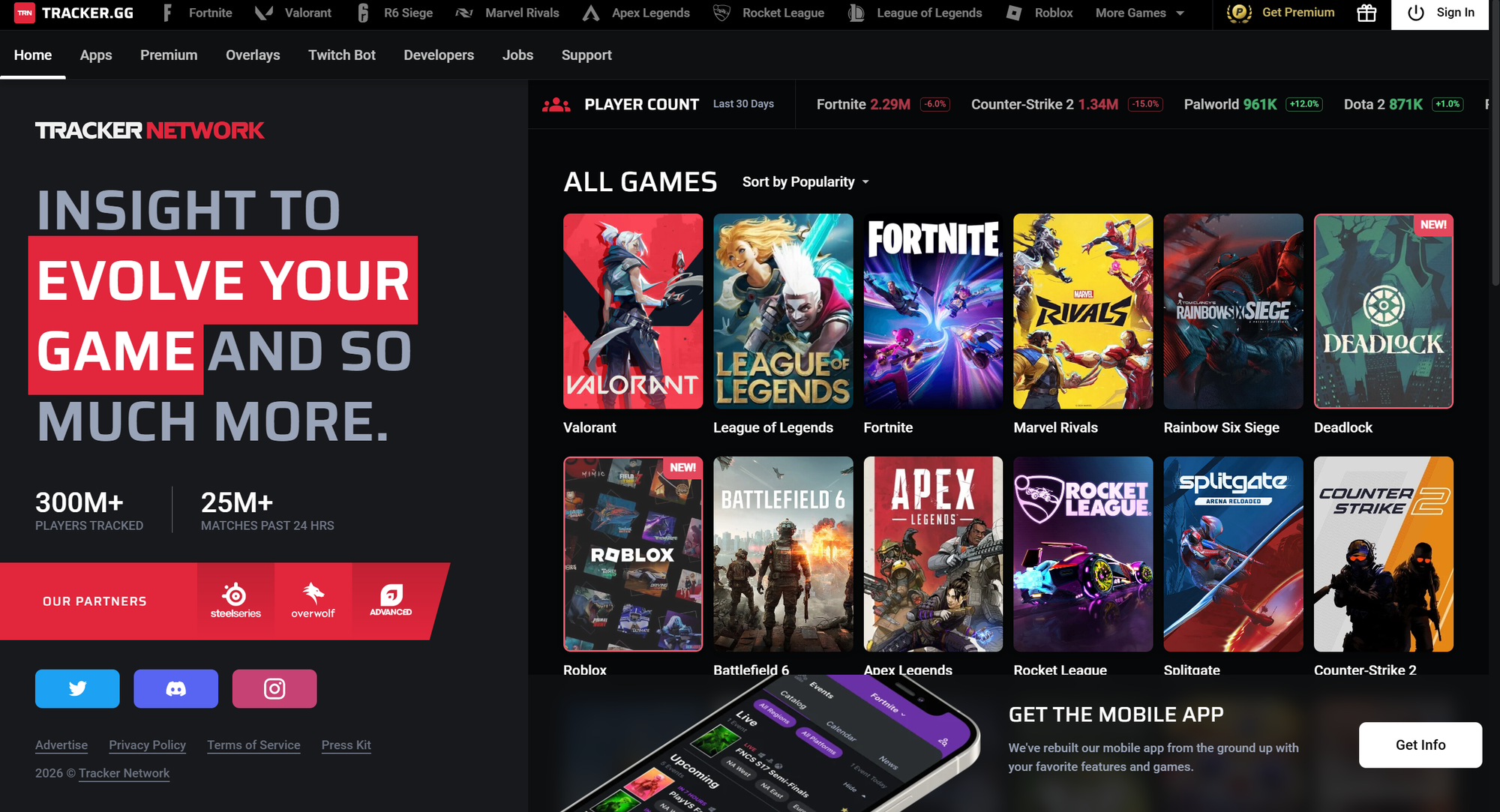
Tracker.gg focuses on your own performance rather than professional results. The platform covers Valorant, Apex Legends, League of Legends, Fortnite, and a growing list of titles, pulling match history and rank data directly from each game's official API. Each profile breaks down win rate, K/D, role or agent usage, and ranked progression over time, with a Tracker Score that combines multiple stats into a single performance number. The overlay feature lets players display live stats during a stream without leaving the game. For competitive players who want to analyze their own gameplay and benchmark against others at the same rank, Tracker.gg is well-suited to data-driven self-improvement.
3. VLR.gg
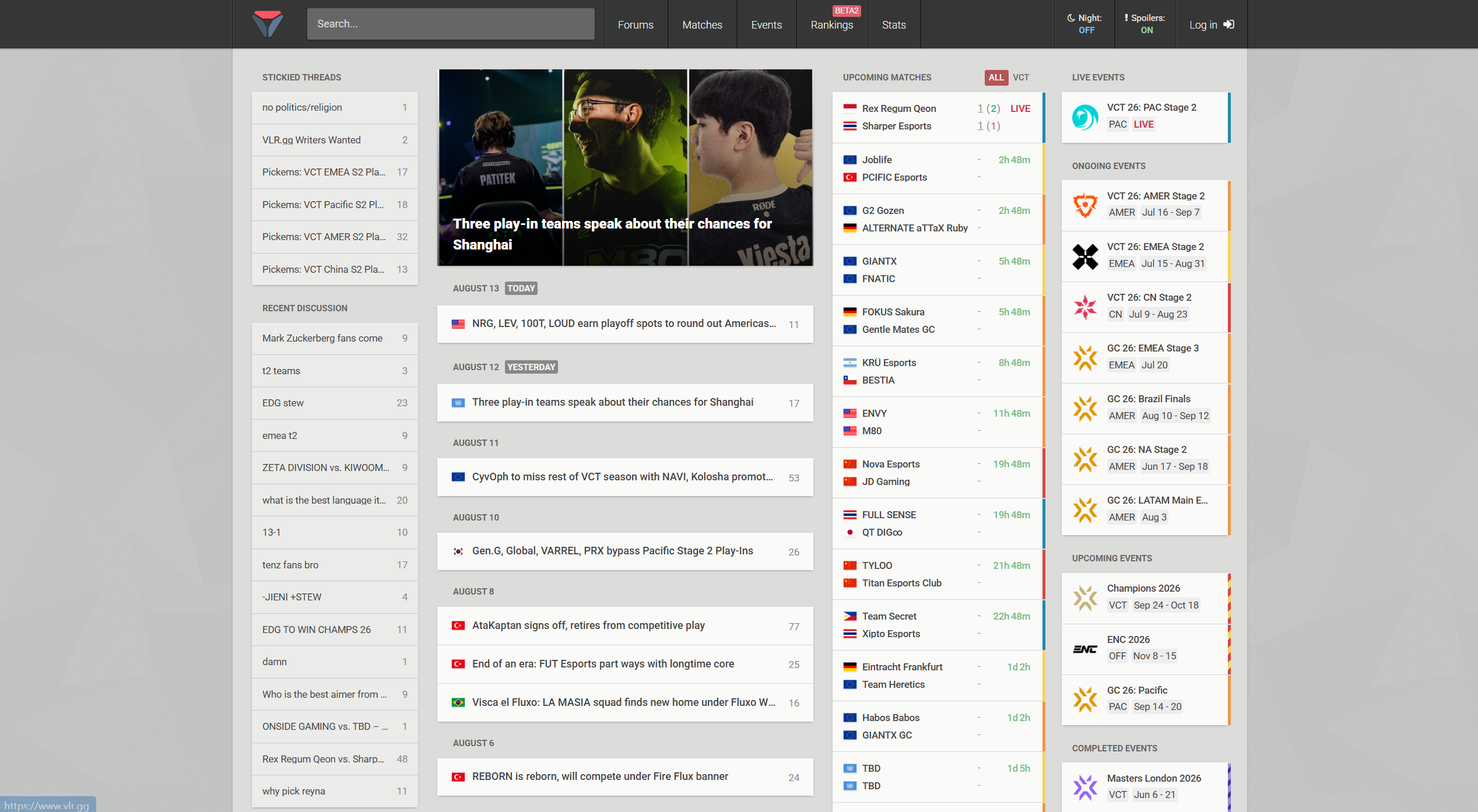
VLR.gg is the definitive tracker for Valorant esports, covering the VCT international circuit and regional leagues across schedules, match results, team rankings, and player statistics. Its match pages go deeper than most: round-by-round breakdowns, agent selections, and full player stat lines are available for every game, with VOD links attached directly to the result page. Team and player profiles aggregate performance data across events, making it straightforward to evaluate form heading into a major. The community forums are active and often surface analysis and discussion faster than official broadcast commentary. No other platform matches VLR.gg's depth for competitive Valorant.
4. Leagues.gg

Leagues.gg is a social stats platform for League of Legends, Valorant, and osu!, built around the ability to follow anyone from your friends to your favorite pros and track their games in one feed. Profiles pull in match history, ranked stats, and performance trends, and the social layer means you can see how your network is playing without jumping between separate profile lookups. The platform covers all skill levels rather than just the professional scene, making it useful whether you are watching someone's climb to Challenger or following a friend through ranked placements. For players who want stats tied to a community experience rather than a pure data dashboard, Leagues.gg fills a gap that most trackers leave open.
5. Strafe
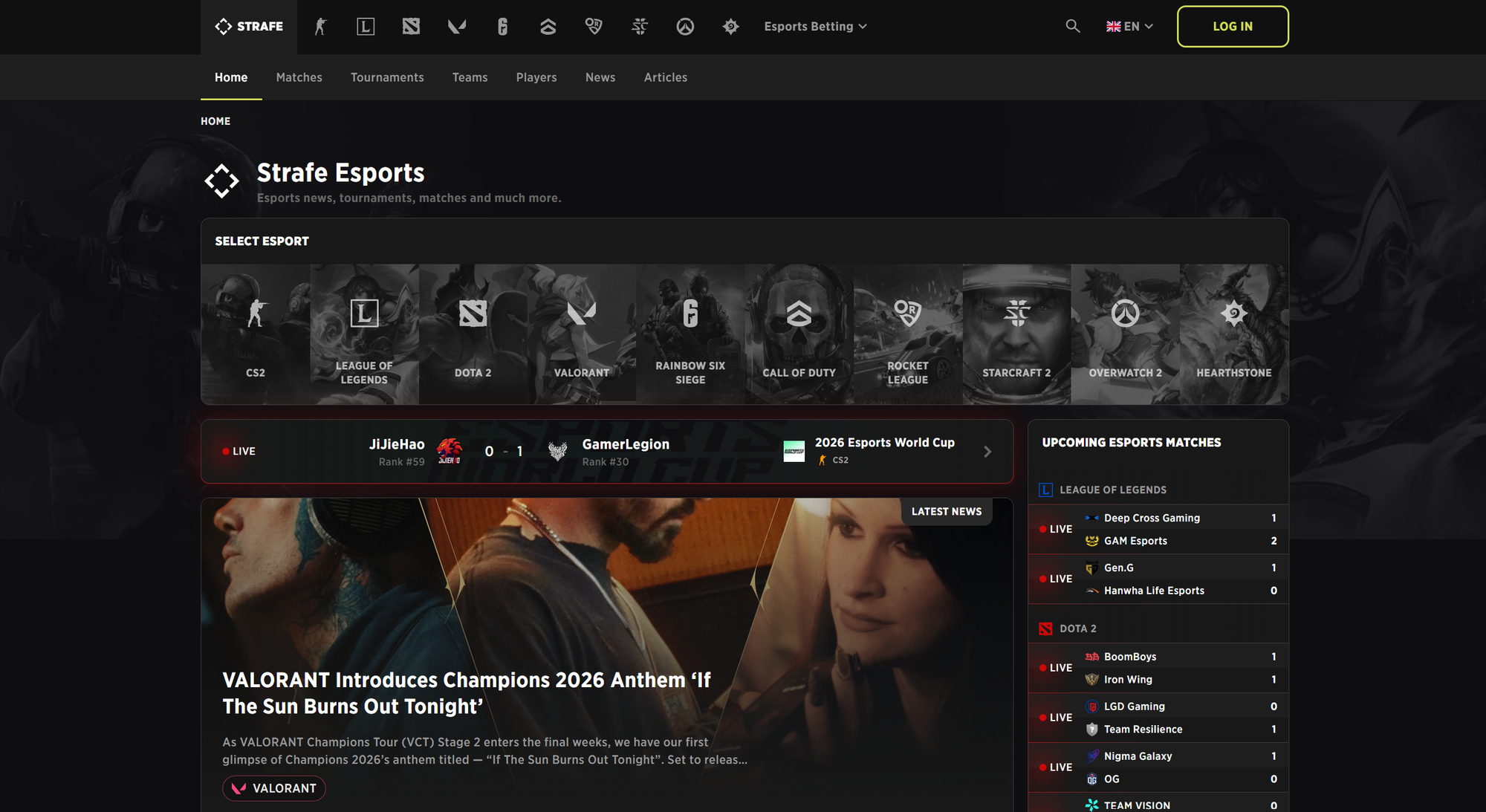
Strafe is built around the esports calendar, pulling match schedules, live scores, and results across the biggest competitive titles and covering over 240 events and more than 5,000 matches a year. Beyond passive tracking, it includes a prediction game called Strafe Score where users pick match outcomes and earn rewards for correct calls. Team pages include head-to-head records and ranking trajectories, useful for sizing up a matchup before it happens. Notifications can be set per team or per title, so you do not need to check constantly to know when your matches go live. For managing a schedule that spans multiple games, Strafe removes most of the navigation overhead.
6. Esports Charts
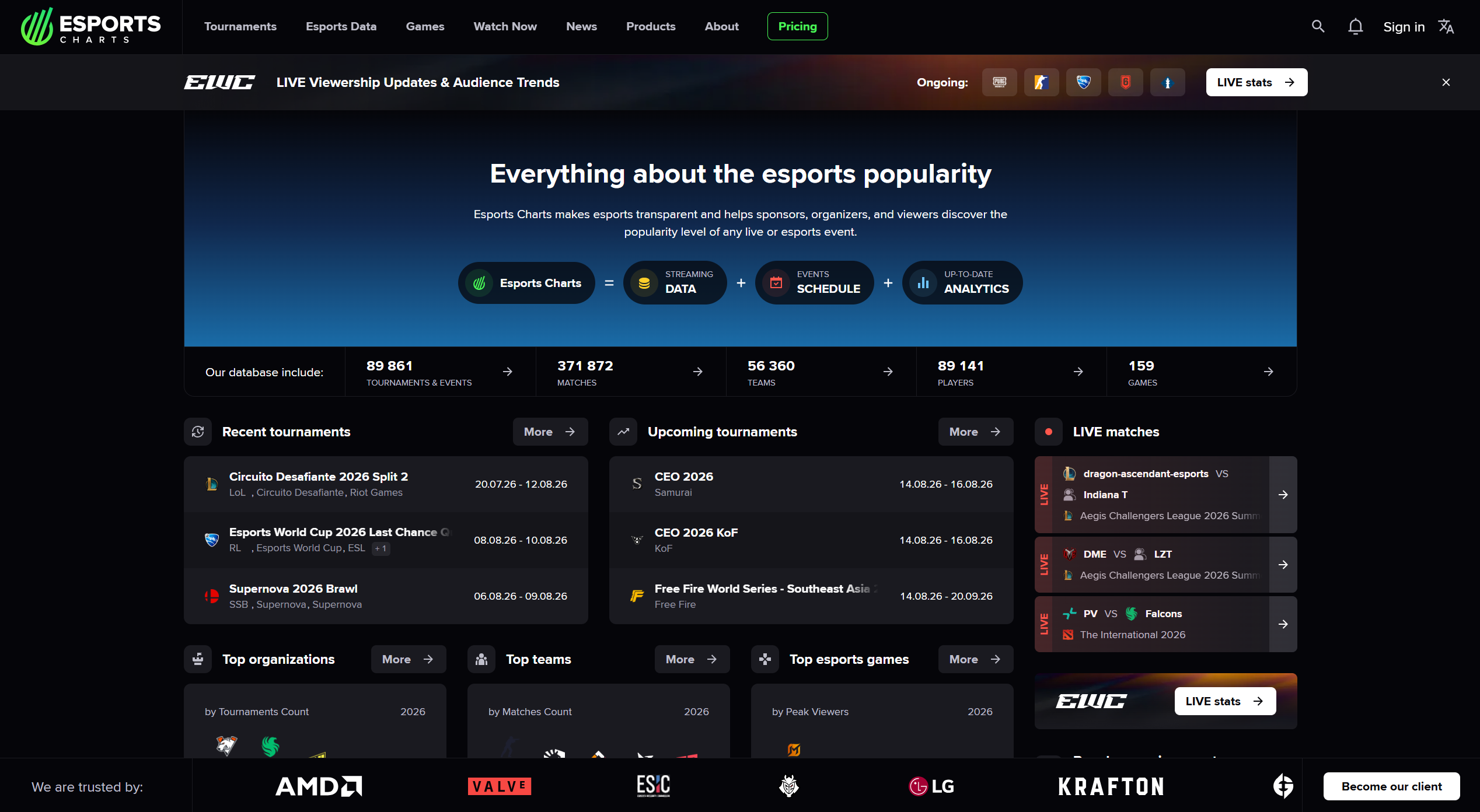
Esports Charts tracks viewership numbers rather than match results or player stats, recording peak viewers, hours watched, and audience breakdowns for tournaments across every major title. Its tournament pages list top-performing matches by peak viewership alongside language and platform splits, with enough granularity to see which broadcast networks drew the most viewers for any given event. Team Liquid uses Esports Charts to analyze its audience with greater depth and flexibility than other available tools, which reflects the platform's standing in the industry. For anyone who wants to understand the scale of competitive gaming as a spectator event rather than just a competition, Esports Charts is the primary data reference.
7. OP.GG
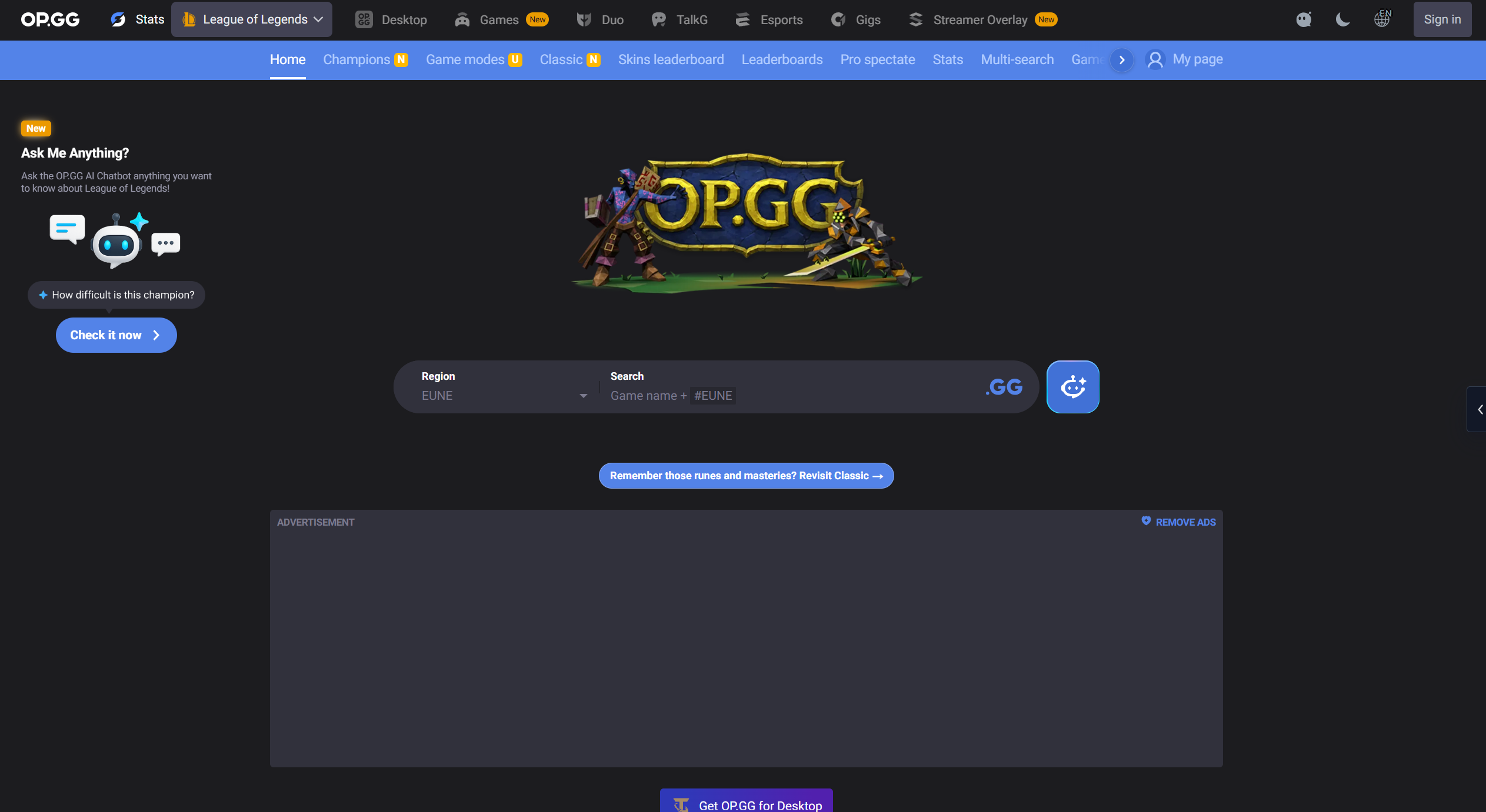
OP.GG is the most widely used stats platform for League of Legends, letting players look up any summoner's match history, win rate, champion pool, and ranked standing. Champion pages aggregate win rates, tier rankings, builds, runes, and counters from millions of ranked games, updated with each patch. The platform also covers Valorant and Teamfight Tactics, making it a practical multi-game tool for anyone playing across the Riot ecosystem. For LoL players who want to scout opponents before a match or track their own champion performance over time, OP.GG is the first site most players open.
If you'd like to learn more about how Nitro can help you grow your revenue, get in touch with our team.
Nitro is dedicated to reinventing website monetization for the gaming industry. Our ad tech platform delivers uncompromised user experience alongside high performance revenue, with Net 7 payouts, same day support, and fully transparent real time reporting.