Welcome back to Publisher Showcase, where we highlight the people and platforms building standout experiences across the Nitro network.
This month, we're spotlighting Eric West, Co-Founder and CEO of Music League, the world's leading social music game turning playlist-building into friendly competitions. What started as a way for a group of coworkers to stop managing a homemade music game manually has grown into a platform with over a million registered users, almost entirely through word of mouth.
Read on to discover how Music League is turning music into a powerful tool to reconnect old friendships and bridge generations, from Gen Z discovering the Beatles to getting grandmas hooked on Skrillex.👇
First up, can you tell us a bit about your career/life background that led you to start Music League?
I’ve been an entrepreneur for most of my career, but not in music. I built and eventually sold a Physical/Occupational consulting company focused on workers’ compensation, then went back and got my MBA.
Way before any of that though, I spent the bulk of my time as an undergrad at Colorado College running the student organization dedicated to live music. I wanted to work in the music industry from then on, but I went a different way for my first job, then got pulled into the physical therapy world. When I heard about Music League – then a tiny web app – I had to take the leap of faith.
What drove you to create Music League? Did you see a specific gap in the market? Was there a particular insight that motivated you to launch it?
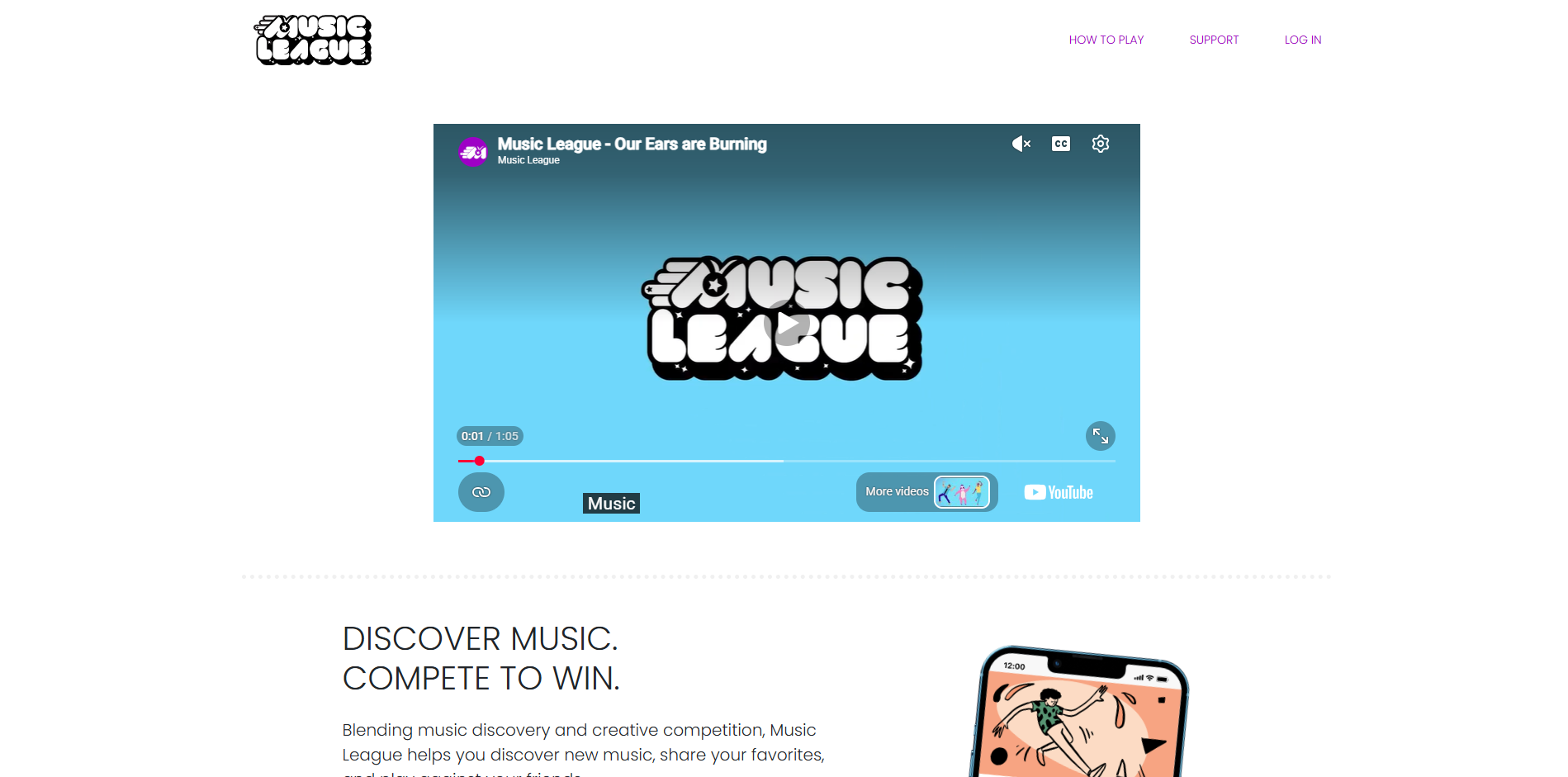
To be fair, I didn’t create the game. I built the company that made the game easier to find and share – and more fun.
I wouldn’t call it a gap in the market. The market didn’t exist before Music League. Sort of like Fantasy Sports made an entire industry based on the by-product of professional sports: the stats. Music already existed and that’s all that is required for this new vertical to exist.
The appeal was clear to me from the start. Algorithms are really good at giving us more of what we already like. But when I think about the music I truly love, most of it came from another person and was usually just a bit outside my comfort zone.
Music League puts people back into music discovery. The competition gives you a reason to listen, but discovery and the social connections are what keep it interesting.
How long have you been running your website and how long did it take from development until it was live?
The original game started in 2016. The first, fairly simple, version of Music League – as a web app - went online not long after that. It wasn't a grand startup launch. It was essentially a tool to allow friends (coworkers, initially) to stop managing the game manually. It grew from that point to where it is today - all by word of mouth.
I heard about it early on from an old high school classmate. After I sold the work comp consulting company I took over a billing company at the very beginning of the pandemic. It survived, barely, but couldn’t afford to keep me on.
Suddenly I had nothing but time and that old dream to work in the music industry. I partnered with one of the people who created the first version of the game to create an actual business around it. That happened relatively quickly with the mobile apps, actually, marking the official launch in 2022, followed by an upgraded web app shortly after.
How did you decide on the specific features and tools available on Music League?
Mostly by watching people play.
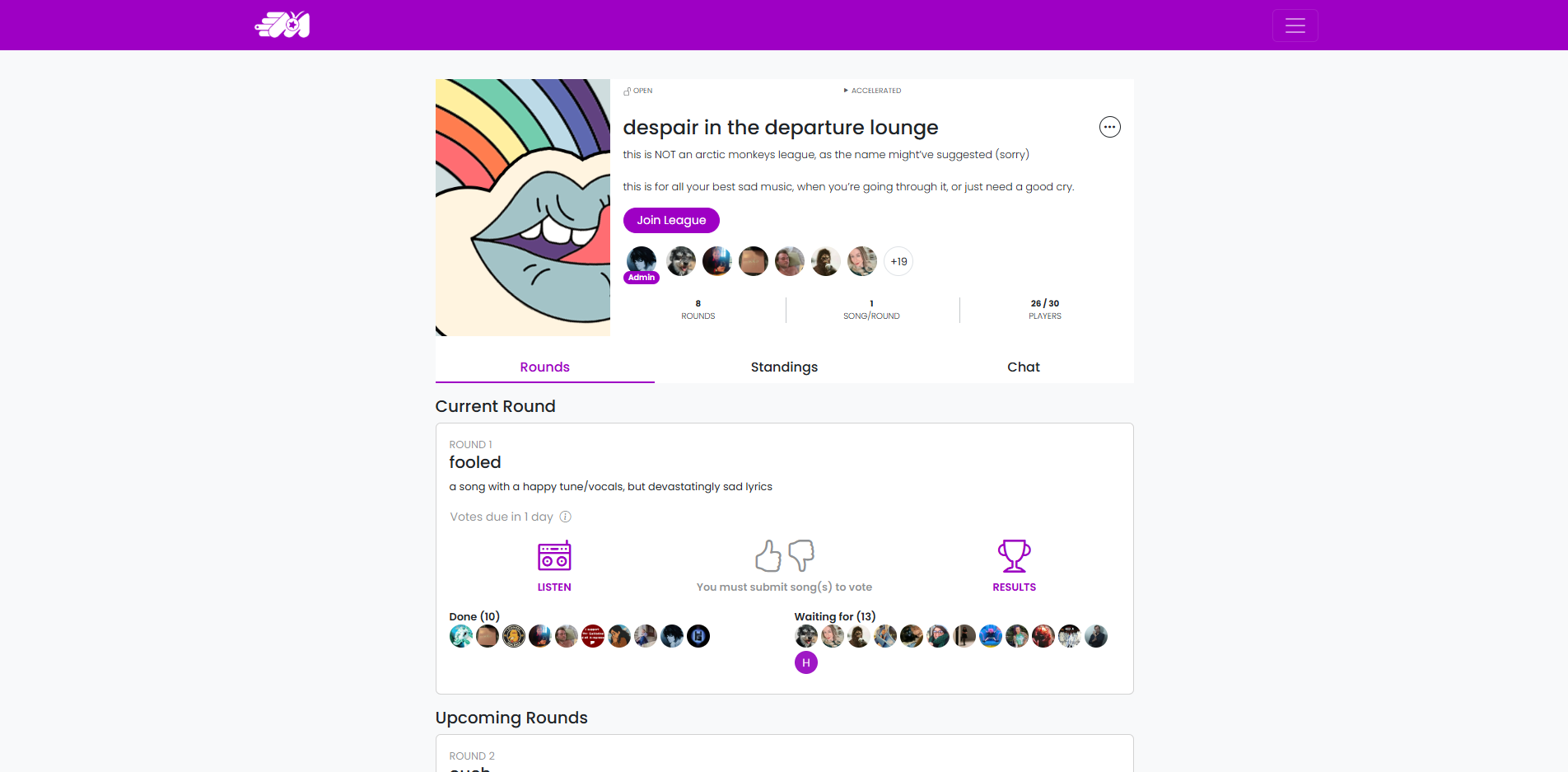
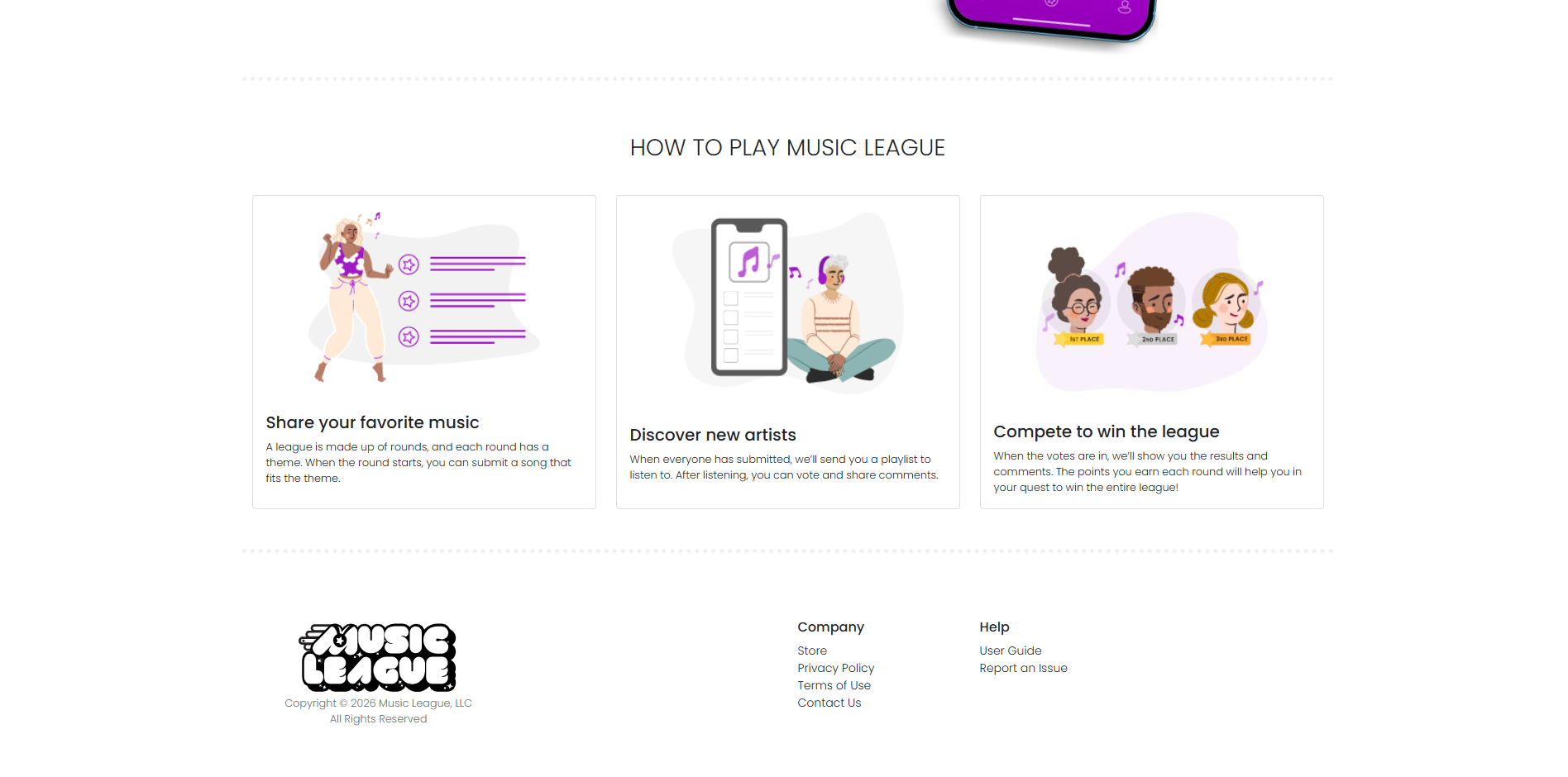
The core mechanic has remained remarkably simple: somebody creates a league, creates themed rounds, players submit songs, everyone listens (without knowing who submitted what), then they vote and comment before the results are revealed.
Comments and Chat became much more important than we anticipated, too. They're often where the personality of a league really comes out. When we started allowing “public leagues” it became clear that people wanted to treat Music League like a social platform, but one that revolved around music. That is coming as part of v2.0.
Specific features were added to the platform over time, more will be in 2.0 at launch – and a ton more are on the roadmap – all because we are lucky enough to have users who love the product so much that they put their social capital on the line by sharing Music League with their friends and because they tell us exactly what they want to see built.
How were you able to build a strong online presence for the website? (e.g. SEO, forums, PPC, influencers etc)
The funny thing is, we really didn't do anything. We've spent essentially nothing on user acquisition. No meaningful PPC strategy, influencer campaigns or big marketing push. More than a million people have registered primarily because someone invited them to play Music League.
That creates a really interesting growth loop. One person starts a league and invites ten friends. Some of those people eventually start their own leagues and invite another group of people. Those people do the same thing.
It's probably the thing about Music League's growth that surprises people the most. For most of our history, the product itself has been our acquisition strategy.
What have been some of the most effective tactics to drive traffic to your website so far?
The most effective is actually the only tactic we’ve used. Music League is inherently social, so every league creates an opportunity to introduce new people to it.
And once somebody understands the game, it's very easy for them to imagine another group they'd like to play with—their family, coworkers, college friends, neighbors, music-obsessed friends… and then we make it as easy as possible for them to bring those people along for the ride.
It is something people want other people to experience with them.
Has AI changed how you manage or grow your website (e.g. traffic, content creation, user engagement)?
We're a very small team supporting a product used by people all over the world, so AI gives us leverage in areas where larger companies might have entire departments.
We use it internally for everything from helping think through product ideas and analyzing data to development, research and marketing.
All of that is great, but ironic because Music League is centered on being anti-algorithm. AI, while much more than an algorithm, serves a similar purpose —to replace the thing that makes Music League interesting in the first place: humans interacting with humans. So we're absolutely using AI to help us build and grow Music League, but the appeal of the product is based on it being the opposite of AI.
What are you most proud of in regards to the success of Music League so far? Any major highlights?
Crossing one million registered users was obviously a pretty amazing moment, particularly because it happened organically..
But some of the things I'm proudest of aren't numbers. I feel really good knowing that people are using music to maintain, sometimes reestablish, and grow real and meaningful relationships .
We once heard from a grandmother who thanked us because Music League finally got her grandchildren listening to the Beatles. Then she added that they'd gotten her listening to Skrillex.
That's Music League.
We've heard stories about families staying connected, remote coworkers actually getting to know each other, friendships forming between people in different countries, and people discovering artists they now love.
We started out trying to make a fun music game. Finding out that it actually helps people connect with each other has probably been the most rewarding part of building it.
What advice do you have for new and existing website owners that you wish you knew before you started?
Pay very close attention when your users love your product for a different reason than the one you built it for then give in to it. We thought Music League was about music discovery and competition. It is. But when we started asking users why they played, we learned that connecting with other people was just as important.
That's changed how I think about the company. I'd also say don't confuse complexity with value. Some of Music League's most important mechanics are incredibly simple. The temptation is always to add more. Sometimes the harder—and better—decision is figuring out what not to add.
And finally, if you think you're eventually going to need outside capital, start learning how that process works earlier than you think you need to. Fundraising takes a tremendous amount of time and attention away from actually running the business.
What do you like best about being a part of Nitro’s network of premium gaming/entertainment websites?
For us, it's been finding a monetization partner that understands the distinction between maximizing the value of advertising and the amount and the quality of that advertising.
That's particularly important for Music League. We're building something people genuinely enjoy spending time with and protecting that experience matters more to us than squeezing every possible impression out of every session.
The contrast in user satisfaction from our PWA/browser users (Nitro) and our mobile users is almost immeasurable. To be fair, that has a lot to do the mobile advertising setting the bar so unbelievably low, but it is also directly attributable to Nitro being so great.
What’s next for Music League?
This is probably the most exciting point in Music League's history.
For most of our existence, Music League has essentially been a game people play within groups they already know. We're beginning to expand beyond that—to make it easier to discover people, communities, artists and eventually brands through music.
Artists are particularly interesting. Their fans are already creating communities around their music on Music League without the artists being involved. We think there's an opportunity to invite artists into those communities and give them a very different, really fun and almost effortless way to interact with fans.
There's a much larger social platform hiding inside this little music game.
We've spent years proving that people want to play it. Now we're finding out what happens when we connect all of those people.
A big thank you to Eric from Music League. Keep your eyes peeled for more insightful interviews like this in next month's edition of our Publisher Showcase, where we’ll continue to spotlight one of the 500+ stand out websites on Nitro, diving deep into their unique success!
Nitro is dedicated to reinventing website monetization for the gaming industry. Our ad tech platform combines uncompromised user experience, nitro-speed revenue and service with Net 7 Payouts, same-day support and the industry’s fastest ad loading.